
What Does a Wisdom Tooth Coming In Look Like?
A wisdom tooth coming in often looks like a small white point behind the last molar. Sometimes only one corner shows at first, while the rest stays covered by gum tissue.
Wisdom teeth usually erupt slowly and unevenly. Many people expect a full tooth to appear all at once, but that is not how it usually happens.
The location also makes it harder to spot. Wisdom teeth come in at the very back of the mouth, behind the second molar, so they can be difficult to see without good lighting or a dental mirror.
At Empower Dental Pasadena, our wisdom tooth extractions team in Pasadena, CA provides the kind of evaluation and care you may be looking for.
What You May Notice in the Mirror
If the tooth is erupting in a fairly normal way, the gum behind the last molar may look slightly raised before any tooth is visible. Then a white or off-white ridge may begin to break through the surface.
Sometimes the area looks puffy instead of clearly tooth-like. That can happen when the crown is still pushing through the soft tissue.
A common pattern is a partially erupted wisdom tooth. This means part of the tooth is visible, but part remains covered by gum.
The gum may form a flap over the back part of the tooth. Food and bacteria can collect there more easily, which is one reason this stage often causes irritation.
If the tooth is angled, the visible portion may seem to lean toward the tooth in front of it. In that case, it may not look like it is coming in straight.
How Normal Eruption Differs From a Dental Concern
A wisdom tooth that has enough room may come in gradually with mild soreness and limited swelling. The gum may feel tender for a while, but the area often stays manageable.
Problems are more likely when there is not enough space in the jaw. That can lead to impaction, which means the tooth is trapped fully or partly under the gum or bone instead of erupting normally.
An impacted wisdom tooth may not be visible at all. In other cases, only a small section appears while the rest presses into the gum or the neighboring molar.
This is why appearance alone has limits. A tooth may look small on the surface but still be pushing sideways underneath, which is why dental X-rays are often the key next step when symptoms keep coming back. A routine dental exam & cleaning visit with X-rays can help clarify the tooth's position and risk.
Common Signs That Happen With Wisdom Teeth Coming In
The way the area looks is only part of the picture. Many people also notice pressure in the back of the jaw, tenderness when chewing, or soreness when brushing near the last molar.
The gum may look redder than the surrounding tissue. It may also bleed more easily if the tissue is inflamed.
Some people notice a bad taste or bad breath when the gum flap traps debris around the erupting tooth. That does not always mean a major infection, but it does suggest the area is harder to keep clean.
Mild swelling near the jaw can happen, especially if the tooth is partly erupted. If swelling spreads, becomes severe, or affects how wide you can open your mouth, it needs prompt dental attention.
When the Area Looks Inflamed Instead of Simply Erupting
One of the most common problems around erupting wisdom teeth is pericoronitis, which is inflammation of the gum tissue around a partially erupted tooth. In simple terms, this means the tissue around the back tooth has become irritated, swollen, and harder to clean.
The area may look red, swollen, and shiny. In some cases, the gum flap becomes thicker and feels painful when the upper tooth bites against it.
This may start as local irritation, but it can become more serious if bacteria build up under the tissue. Recurrent flare-ups are common when the tooth remains partly trapped.
A dentist will usually check both the visible tissue and the tooth position on X-ray. That combination gives a much more reliable answer than appearance alone. If the tooth is severely impacted or needs more advanced management, an oral surgery consultation may be recommended.
Red Flags That Should Not Wait
A wisdom tooth coming in should not cause severe facial swelling, fever, pus, or trouble swallowing. Those signs may point to a spreading infection or another problem that needs urgent evaluation.
Seek prompt dental care if there is swelling that limits opening the mouth, pain that rapidly worsens, drainage with a foul taste, or swelling that extends into the cheek or under the jaw. These dental emergency signs should not be ignored.
If breathing or swallowing becomes difficult, that is more urgent and should be treated as immediate medical care. Those symptoms go beyond a typical tooth eruption pattern.
Why Wisdom Teeth Often Look Different From Other Teeth
Wisdom teeth are the last adult teeth to erupt. By that point, the jaw may not have enough room for them to come in cleanly.
That late timing changes how they look during an eruption. Instead of a smooth, centered emergence, the tooth may appear only in fragments, under swollen tissue, or at an angle that makes it hard to identify.
This is also why online photo comparisons can be misleading. Two wisdom teeth may look very different on the surface while having similar underlying issues.
What a Dentist Checks During an Evaluation
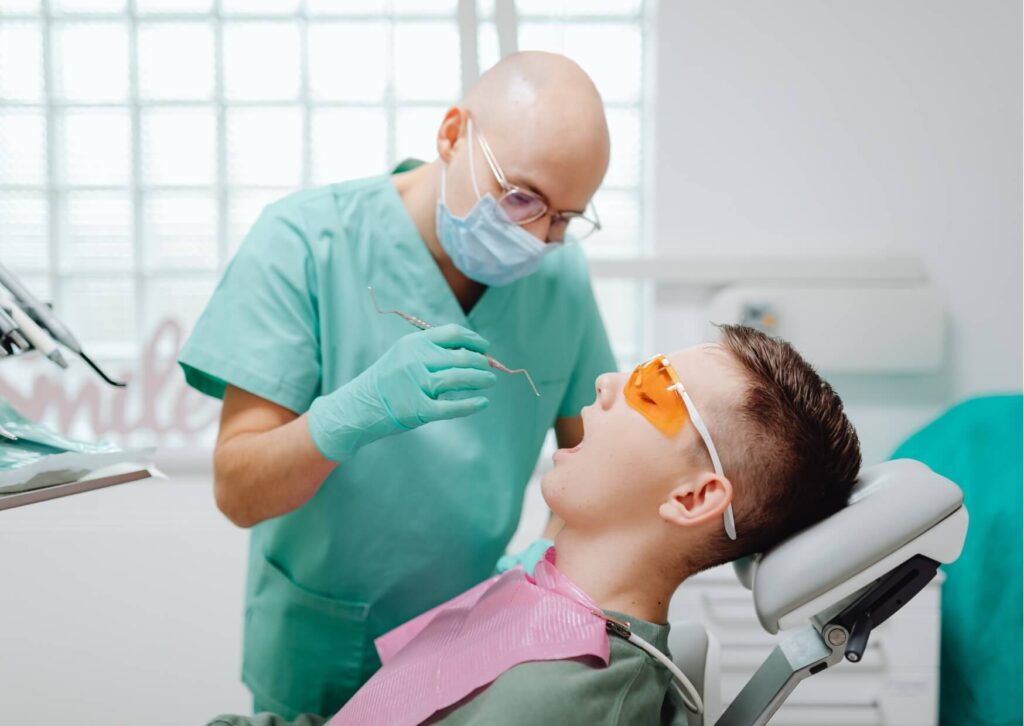
A dentist usually checks how much of the tooth is visible, whether the gum tissue is inflamed, and whether the nearby molar is at risk. The exam also looks for trapped debris, bite trauma, and signs that cleaning the area is becoming unrealistic.
X-rays are often the deciding factor. They show whether the tooth is upright, angled, impacted, or pressing against the tooth in front.
That matters because the question is not only what the wisdom tooth looks like today. The more important question is whether its position is likely to stay stable, cause repeated inflammation, or damage nearby structures over time.
What to Do If You Think a Wisdom Tooth Is Coming In
If you notice a new white edge or swollen gum behind the last molar, it is reasonable to monitor the area briefly and keep up with normal oral hygiene. The key is to watch the pattern, not just the first appearance.
If the area stays sore, becomes harder to clean, or repeatedly swells, schedule a dental evaluation. Persistent symptoms usually mean the tooth position and surrounding tissue need a closer look.
In cases where removal is the best option, wisdom tooth extractions can safely resolve repeated inflammation and help protect adjacent teeth.
A practical approach is best. A wisdom tooth coming in is common, but repeated inflammation is not something to ignore, especially when the tooth is only partly visible.
A clear exam and X-ray can show whether the tooth is erupting normally, getting stuck, or creating conditions that are likely to keep causing trouble. That kind of evaluation is the best next step when what you see in the mirror does not match how the area feels.
Empower Dental Pasadena in Pasadena, CA provides wisdom tooth extractions and related care; we also serve nearby Burbank and La Canada Flintridge. Call (626) 427-0290 to schedule a consultation.
FAQs
Can a wisdom tooth come in without being easy to see?
Yes. A wisdom tooth may stay fully under the gum or bone, or only a small part may be visible at the back of the mouth. This is one reason symptoms can be present even when the tooth is hard to spot.
Is a white bump behind my molar always a wisdom tooth?
Not always. A white area behind the last molar may be an erupting tooth, but it can also reflect irritated tissue, a normal ridge of anatomy, or another dental issue. If the area is painful, swollen, or unclear, a dentist should examine it.
What does an impacted wisdom tooth look like?
An impacted wisdom tooth may not look like much from the surface. Sometimes only a small corner is visible, and sometimes nothing can be seen without an X-ray.
Should I worry if the gum is covering part of the tooth?
Partly covered wisdom teeth are common, but they are more likely to trap food and bacteria. If the gum repeatedly swells, hurts, or develops a bad taste or odor, it should be evaluated.
How long does it take for a wisdom tooth to fully come in?
It varies widely. Some wisdom teeth erupt over months, while others remain partially erupted or impacted for much longer. The timeline mostly depends on space, angle, and jaw anatomy.
Most people have heard the standard advice to see a dentist every six months. That…
Many people think fluoride is mainly for children, but that is not the full picture.…
Choosing between crowns and veneers is not just about which one looks better. In most…
Flexible Payment Options
Get started in minutes with no impact on your credit—plus take advantage of 0% APR financing for up to 24 months.
- Quick approval process
- Soft credit check only—no effect on your score
- Apply funds to any dental service
Click below to check your eligibility—completely risk-free.