
Crowns vs. Veneers: How Dentists Match Treatment to Your Needs
Choosing between crowns and veneers is not just about which one looks better. In most cases, the right choice depends on how much healthy tooth structure remains, what needs to be corrected, and how much daily force the tooth handles.
That matters because these treatments do different jobs. Crowns cover the full tooth, while veneers cover only the front surface, so the best decision usually starts with function first and cosmetics second.
At Empower Dental Pasadena, we provide dental crowns in Pasadena, CA and can help determine whether a crown or veneer is the right fit for your tooth.
What Each Treatment Does
A dental crown is a custom cap that covers the entire visible part of a tooth above the gumline. Dentists often use crowns when a tooth is weakened, heavily filled, cracked, worn down, or treated with a root canal and needs more support. Learn more about our dental crowns & bridges services.
A veneer is a thin shell, usually made from porcelain or a tooth-colored material, bonded to the front of a tooth. Veneers are mainly used to improve shape, color, minor size differences, and some small alignment issues when the underlying tooth is still fairly strong. Many of these concerns are addressed through our cosmetic dentistry options.
This difference is the core of the crowns vs. veneers decision. One treatment is more protective, and the other is more conservative when the tooth is healthy enough to support it. For a patient-friendly overview of veneers vs. crowns, Cleveland Clinic explains how the two options are typically used.
The Main Decision Point Is Tooth Structure
If a tooth has lost a significant amount of enamel or dentin, the hard layer under the enamel, a veneer may not provide enough coverage or support. In that case, a crown often makes more sense because it can better protect the tooth from further fracture and restore biting strength.
If the tooth is mostly intact and the concern is cosmetic, a veneer may preserve more natural structure. That is one reason veneers are often chosen for front teeth with discoloration, slight chipping, uneven edges, or small gaps.
A good dentist usually evaluates this with an exam, X-rays when needed, bite analysis, and photos. Digital tools can also help with planning and visualization, including digital smile design when a preview of cosmetic results would be helpful.
A treatment that seems conservative on paper may fail early if the tooth has hidden cracks, large fillings, or heavy bite stress. That is why the condition of the tooth matters more than the label of the treatment.
When Crowns Usually Make More Sense
Crowns are often the better option when a tooth needs protection, not just cosmetic improvement. This may apply when there is a large cavity, a fracture, severe wear, a root canal, or a large existing filling that leaves limited natural teeth behind.
Back teeth are a common example. Molars and premolars absorb much higher chewing forces than front teeth, so a full-coverage restoration may be more durable when the tooth is already compromised.
Common Reasons a Crown May Be Recommended
- The tooth has a large filling or major structural loss
- A crack is suspected or confirmed
- The tooth has had root canal treatment
- There is substantial wear from grinding or acid erosion
- The tooth is misshapen and also weak
- The goal is to restore both strength and appearance
A crown is not automatically the stronger choice for every tooth. It is simply more appropriate when the tooth itself needs reinforcement.
When Veneers Usually Make More Sense
Veneers are usually best when the main goal is to improve appearance and the tooth is still structurally sound. They are commonly used on front teeth because those teeth are visible when speaking and smiling, and they often do not require full coverage if the damage is limited.
Porcelain veneers can be especially effective for stubborn discoloration, worn edges, slight asymmetry, and small spaces between teeth. They can also help create a more even smile when orthodontic movement is not the main need.
Common Reasons a Veneer May Be Recommended
- The tooth is healthy overall but cosmetically flawed
- There is intrinsic staining that whitening may not correct well
- The tooth has a small chip or uneven edge
- There are minor shape or size differences
- Small gaps or mild crowding affect smile balance
Veneers are not ideal for every cosmetic case. If there is active decay, unstable bite pressure, or not enough enamel for secure veneer bonding, another treatment may be safer and longer lasting.
Appearance Differences Patients Notice
Both crowns and veneers can look very natural when planned well. The final result depends on the material, shade selection, tooth preparation, gum symmetry, and whether one tooth or several teeth are being treated.
Veneers often have an advantage when the goal is subtle smile refinement on front teeth. Because they cover only the facial surface, they can preserve more of the natural tooth's light behavior at the edges when the case is selected well.
Crowns can also look excellent, especially all-ceramic crowns on front teeth. Still, if a tooth does not need full coverage, many cosmetic dentists prefer the more conservative option because preserving natural enamel often helps with long-term esthetics and bonding.
How Much Tooth Reduction Is Usually Needed?
In general, veneers require less tooth reduction than crowns. That is one reason many patients see veneers as the less invasive option.
But less reduction is only better when the tooth is a good candidate. If a tooth is already heavily restored or fragile, trying to preserve structure with a veneer can become a false economy if the restoration chips, debonds, or the tooth fractures later.
This is where the crowns vs. veneers comparison becomes practical rather than cosmetic. The best treatment is the one that matches the tooth's risk profile, not just the one that removes less structure during the appointment.
Durability Depends on Bite, Habits, and Case Selection
Patients often want a simple answer about which lasts longer. In reality, longevity depends more on bite forces, grinding, clenching, material choice, oral hygiene, and how well the restoration fits the tooth than on the label alone.
A well-made veneer on a healthy front tooth can last many years. A well-made crown on a heavily restored molar can also last many years. The ADA's overview of indirect restorations also notes that outcomes depend on the material used and the clinical situation.
Failures usually happen when the restoration type does not match the tooth condition or when bite stress is underestimated.
Factors That Can Shorten the Life of Either Option
- Nighttime grinding or daytime clenching
- Nail biting or chewing ice
- Untreated decay around the margins
- Gum recession that exposes edges
- Poor fit or bonding problems
- Trauma to the front teeth
If grinding is suspected, a dentist may discuss protective strategies after treatment. That is especially relevant for cosmetic work on front teeth, where repeated force can chip porcelain or strain the underlying tooth.
Cost Matters, but Value Depends on the Reason for Treatment
Cost matters, but it should be viewed in context. A veneer may seem more appealing if the goal is cosmetic improvement with minimal treatment, while a crown may be a better value if it helps prevent a weak tooth from breaking further.
Fees vary by region, material, lab quality, case complexity, and whether additional work is needed first. In a city practice with a cosmetic focus, veneer planning may involve detailed smile design, temporary prototypes, and multiple shade checks, all of which can affect price.
The better question is not only what costs less today. It is which option is more likely to solve the real problem with fewer repairs, revisions, or retreatment later.
A Side-by-side Comparison
| Feature | Crowns | Veneers |
| Coverage | Covers the whole visible tooth | Covers the front surface only |
| Main purpose | Protects and restores a weakened tooth | Improves appearance of a mostly healthy tooth |
| Typical use | Large fillings, cracks, root canal teeth, major wear | Stains, chips, shape issues, small gaps |
| Tooth reduction | Usually more | Usually less |
| Best location | Front or back teeth, especially compromised teeth | Mostly front teeth |
| Bonding needs | Can work even when enamel is limited | Usually works best with good enamel |
| Cosmetic potential | High, especially with ceramic materials | High, especially for smile design |
| Not ideal when | The tooth could be treated more conservatively | The tooth is weak, heavily filled, or cracked |
This table is a guide, not a diagnosis. Some teeth fall into a gray zone, and that is where a careful exam matters most.
Problems That Should Be Checked First
Before choosing crowns or veneers, a dentist should rule out active decay, gum inflammation, unstable bite patterns, and cracks that extend deeper than expected. Cosmetic treatment placed on top of unresolved disease usually performs poorly.
Some symptoms deserve faster attention. Severe tooth pain, swelling, fever, pus, or pain when biting may point to infection, a crack, or another problem that needs diagnosis before cosmetic planning.
A loose restoration, sudden change in bite, or a chipped front tooth after trauma should also be evaluated promptly. These issues do not always require emergency care, but delaying assessment can reduce treatment options.
How Dentists Usually Decide Between the Two
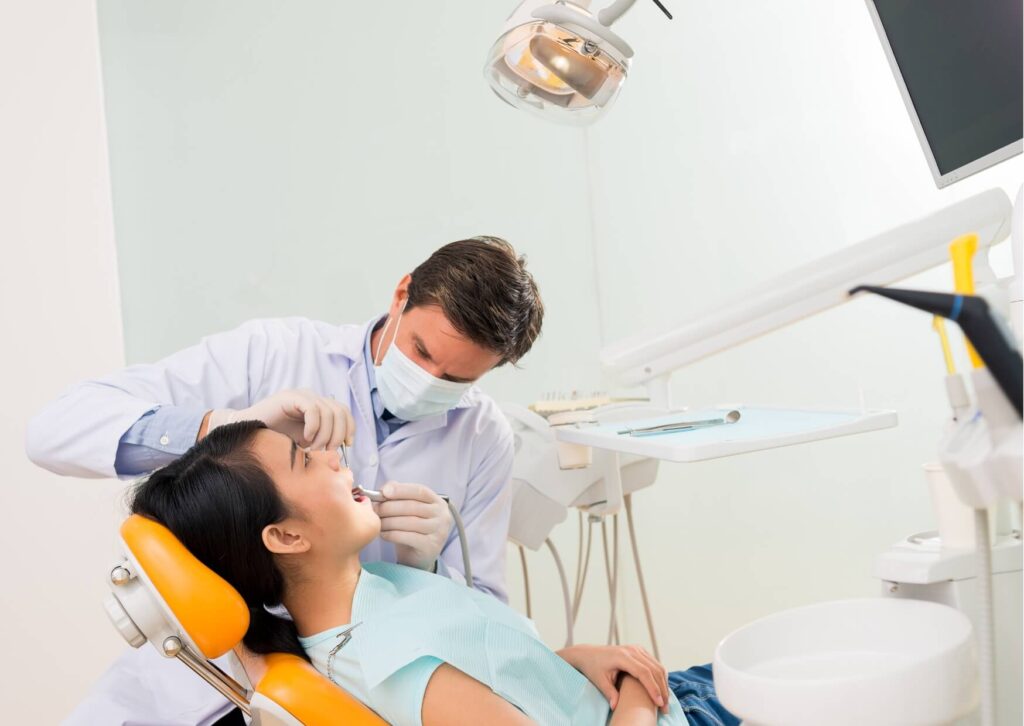
A strong treatment plan starts with an accurate diagnosis. That means checking the health of the tooth, the amount of enamel left, the bite, the condition of the gums, and whether the goal is mainly functional, cosmetic, or both.
Photos, digital scans, and X-rays often help show whether a tooth is intact enough for a veneer or needs the support of a crown. In some cases, the answer is different for different teeth in the same smile.
That is why broad rules can be misleading. A patient may need veneers on several front teeth for color and shape, but a crown on one neighboring tooth that already has a large filling or a history of fracture.
The Better Choice Is the One That Matches the Risk
The crowns vs. veneers question is best answered by looking at what the tooth needs to tolerate over time. If the tooth is healthy and the goal is cosmetic refinement, veneers often make sense. If the tooth is structurally compromised, a crown is often the safer and more predictable option.
The most attractive result is not always the one that starts with the least treatment. It is the one that preserves what can be preserved, protects what is vulnerable, and fits the way your teeth function every day.
If the choice is unclear, a dental evaluation can help sort out whether the tooth needs protection, cosmetic reshaping, or a different treatment entirely. That kind of planning often prevents expensive mistakes and leads to a result that looks natural and holds up better.
At Empower Dental Pasadena, our dental crowns & bridges team in Pasadena, CA can help restore compromised teeth, and we also serve nearby Burbank and La Canada Flintridge; call us at (626) 427-0290 to schedule.
FAQs
Are crowns stronger than veneers?
Crowns usually provide more full-tooth protection because they cover the entire visible tooth. That does not mean they are always the better option, since a veneer may perform very well on a healthy front tooth with lower structural demands.
Do veneers look more natural than crowns?
They can, especially on front teeth when only the facial surface needs improvement. But modern ceramic crowns can also look very natural, so the result depends heavily on case selection, preparation, and lab quality.
Can a badly discolored tooth get a veneer instead of a crown?
Sometimes, yes. If the tooth is structurally healthy, a veneer may mask discoloration well, but some dark teeth or previously treated teeth may require a different approach for a predictable esthetic result.
Are veneers less invasive than crowns?
In many cases, yes, because veneers often require less tooth reduction. Still, less invasive is only better when the tooth has enough healthy structure and enamel to support that choice safely.
Which costs more, crowns or veneers?
Either one may cost more depending on material, location, complexity, and the dentist's planning process. The more useful comparison is which treatment is more appropriate for the tooth's condition and long-term function.
A wisdom tooth coming in often looks like a small white point behind the last…
Most people have heard the standard advice to see a dentist every six months. That…
Many people think fluoride is mainly for children, but that is not the full picture.…
Flexible Payment Options
Get started in minutes with no impact on your credit—plus take advantage of 0% APR financing for up to 24 months.
- Quick approval process
- Soft credit check only—no effect on your score
- Apply funds to any dental service
Click below to check your eligibility—completely risk-free.