
Dental Implants in Pasadena, CA
Replace missing teeth with a plan that explains your options
If you are missing one tooth, several teeth, or most of your teeth, dental implants can be part of a long-term replacement plan. At Empower Dental Pasadena, the visit starts with your goals, your bite, your gum health, and the amount of bone support available for an implant.
The team uses 3D imaging and digital planning to compare realistic options before treatment begins. Some patients need a single implant crown. Others may be better served by an implant-supported bridge, implant denture, or full-mouth implant plan.
Start with a 3D implant consultation
The current implant visit includes a consultation and 3D imaging so the dentist can check the jawbone, gums, nearby teeth, and the space that needs to be replaced.
You can ask which options may work, what should happen first, and how insurance or financing may affect timing before you choose a treatment plan.
What we check before recommending an implant
An implant has to work with your mouth, not just fill an empty space. The first step is to understand the bone, gums, bite, nearby teeth, and final restoration before choosing the type of implant treatment.
Bone and gum support
3D imaging helps the dentist see whether there is enough bone around the missing tooth area and whether grafting, gum care, or a different sequence should be discussed first.
The final tooth or teeth
The plan should account for the crown, bridge, denture, or full-arch restoration that will attach to the implant, because the final tooth design affects placement and timing.
Timing, healing, and health factors
Some patients can move forward in a shorter sequence. Others need tooth removal, healing, bone grafting, gum treatment, or medical clearance before implant placement.
What might affect the price?
Dental implant cost depends on the number of implants, whether teeth need to be removed, whether bone grafting or sinus lift care is needed, and what final tooth replacement is attached to the implant.
In general, dental implants can range from $1,500-$5,000 per tooth depending on complexity, materials, and the supporting care needed. Ask the team to review insurance and financing options before treatment begins.
Number of missing teeth
A single implant crown is planned differently from an implant bridge, implant denture, or full-mouth implant restoration.
Bone, gum, or extraction needs
Tooth removal, bone grafting, sinus lift care, or gum treatment can change the order, timeline, and estimate.
The final restoration
The crown, bridge, denture, or full-arch material affects the total investment, maintenance needs, and replacement planning.
Dental Financing Calculator
What happens during implant treatment?
The exact sequence depends on how many teeth are missing, whether a tooth needs to be removed first, and whether the jawbone needs more support before the implant is placed.
Consultation and 3D scan
The dentist reviews your missing tooth area, bite, health history, gum condition, and 3D images to see what options are realistic.
Options and estimate
You can compare a single implant, implant bridge, implant denture, or full-mouth option and review what may affect cost, timing, and financing.
Implant placement or preparation
If you are ready for placement, the implant is positioned in the jawbone. If bone or gum support is not ready, grafting, sinus lift care, or another first step may be recommended.
Healing and final restoration
After the implant integrates with the bone, the final crown, bridge, denture, or full-arch restoration is attached and adjusted for comfort and bite.
Which implant option fits the missing teeth?
Dental implants are not one treatment for every situation. The best option depends on how many teeth are missing, whether the teeth are next to each other, how much bone is available, and whether you want a fixed or removable restoration.
- One missing tooth: a single tooth implant can support one custom crown without reshaping neighboring teeth for a traditional bridge.
- Several missing teeth in a row: an implant-supported bridge may replace a span of teeth without using every missing tooth space for an implant.
- Loose or uncomfortable dentures: implant dentures can add more stability than traditional removable dentures.
- Most or all teeth missing: full mouth implants may support a fixed full-arch restoration for patients who qualify.
If upper back teeth are involved, the dentist may also discuss whether a sinus lift or bone support procedure should be considered before implant placement.
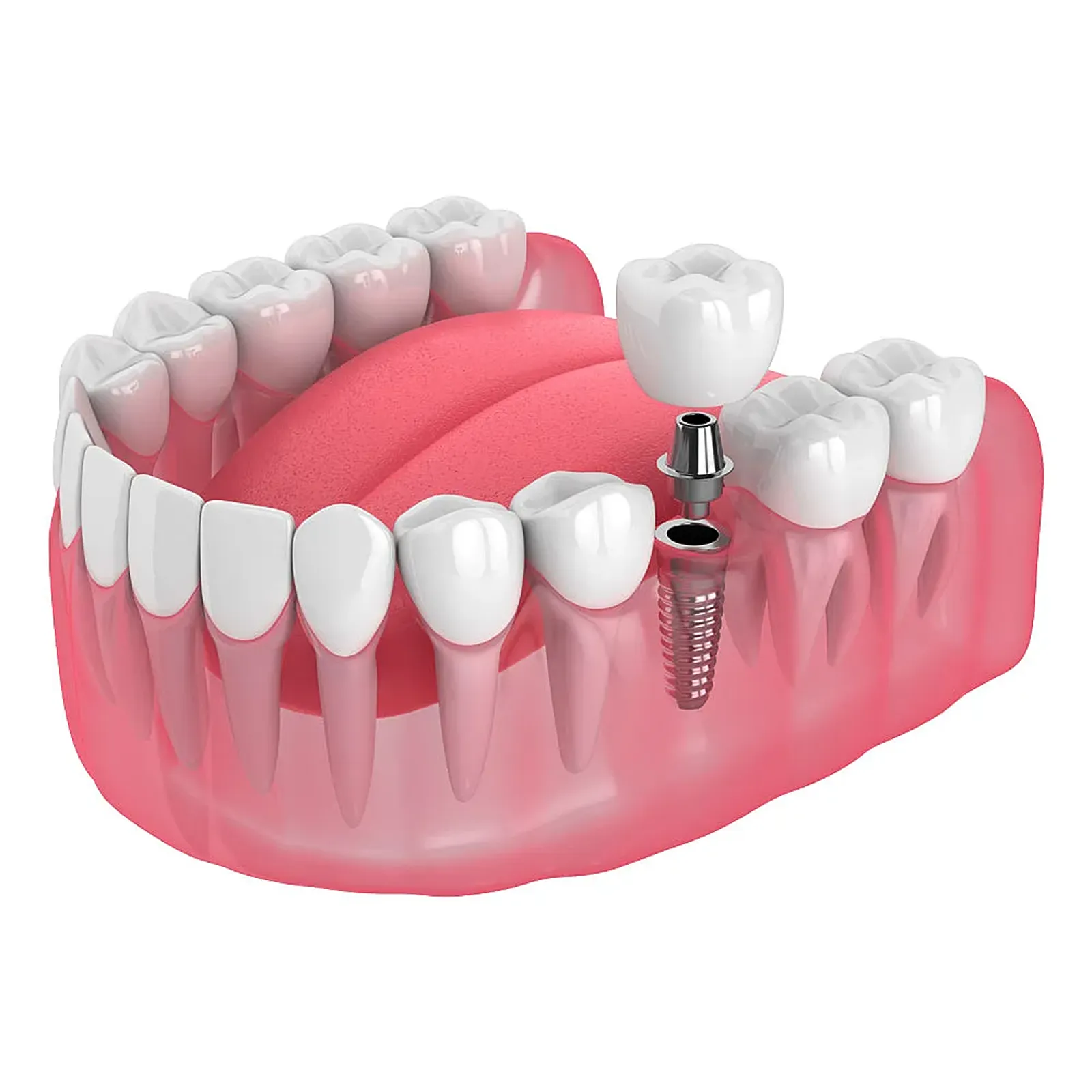
Single tooth implants
A single implant can replace one missing tooth with an implant post and custom crown, while leaving nearby teeth untreated when they are healthy.
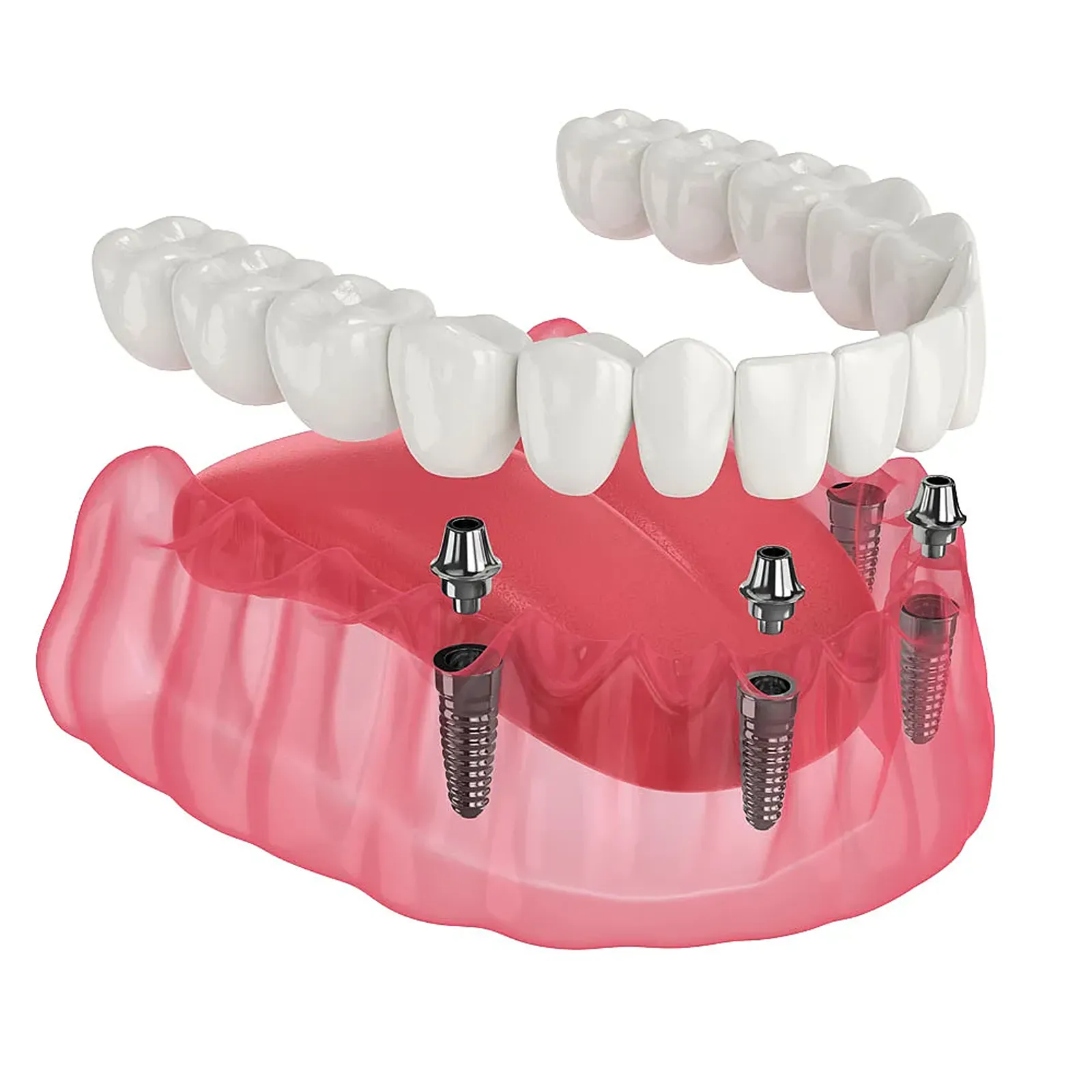
Full mouth dental implants
Full mouth implant treatment may be considered when most or all teeth in an arch need replacement and the patient wants a fixed option.
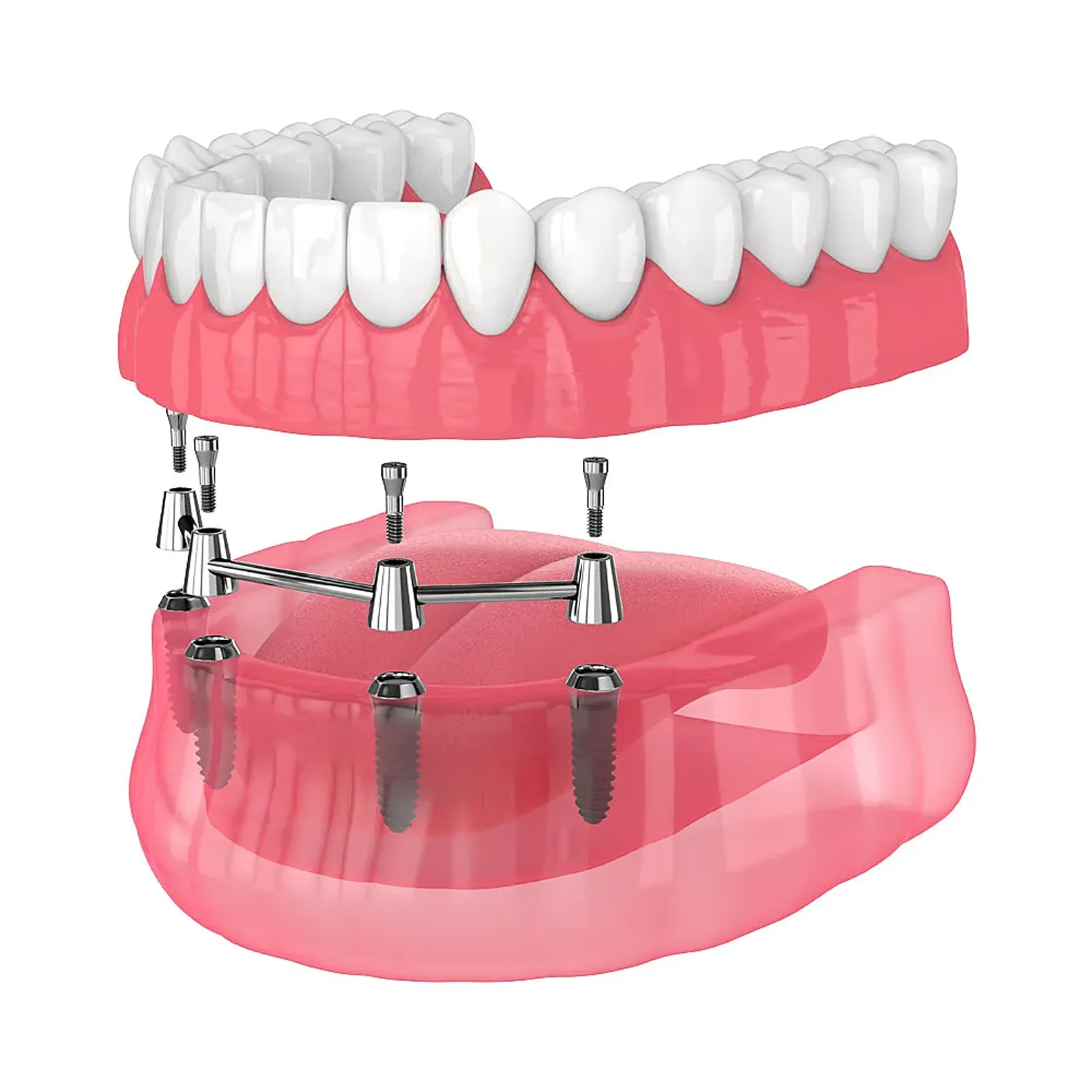
Implant dentures
Implant dentures can help reduce slipping compared with traditional dentures while still allowing a removable design when that is the better fit.
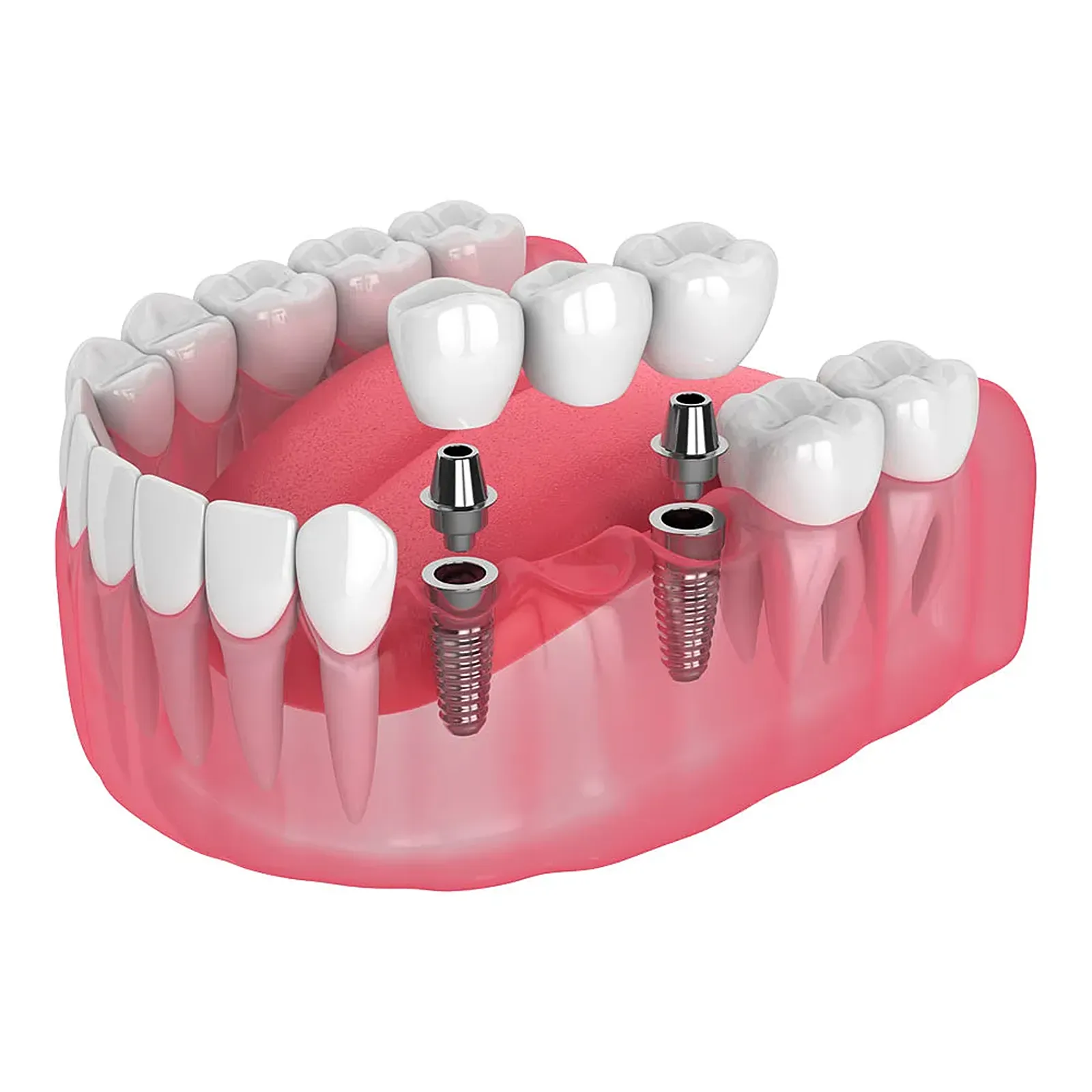
Implant-supported bridges
An implant-supported bridge may replace multiple missing teeth in a row without relying on natural teeth as anchors.
Are dental implants a good fit for you?
Many people with missing teeth can consider implants, but the right answer depends on health, gum condition, bone support, bite forces, smoking history, medications, and how much treatment you want to take on.

You are missing one or more teeth
Implants may replace one tooth, several teeth, or a full arch when the surrounding bone and health factors support treatment.
Your gums and bone need to be checked
Healthy gums and enough bone support are important. If support is limited, grafting, sinus lift care, or gum treatment may be discussed.
Your health history matters
Smoking, uncontrolled diabetes, some medications, and certain medical conditions can affect healing and should be reviewed before treatment.
You can maintain the result
Implants still need brushing, cleaning around the restoration, dental checkups, and maintenance visits to protect the surrounding gums and bone.
Why plan dental implants with Empower Dental Pasadena?
Implant treatment is easier to understand when the care team can look at the whole plan: the missing tooth, the bone, the gums, the bite, the restoration, the cost, and the maintenance after treatment. Empower Dental Pasadena coordinates 3D imaging, digital planning, implant restoration options, and financing conversations around your Pasadena visit.
If you are comparing choices, you can also review patient reviews, meet the doctors, and ask how maintenance or warranty terms apply to the specific implant restoration being planned.
3D planning before treatment
CBCT imaging helps the dentist evaluate bone, nerves, sinus position, and implant placement before treatment begins.
Several implant options to compare
The team can compare single implants, implant bridges, implant dentures, and full-mouth implant options instead of forcing one route.
Cost and financing conversations early
You can review estimates, insurance questions, financing options, and staged timing before deciding how to move forward.
Restoration planning included
The plan includes what will attach to the implant, how it should bite, and what maintenance may be needed after treatment.
Flexible Payment Options
Get started in minutes with no impact on your credit—plus take advantage of 0% APR financing for up to 24 months.
- Quick approval process
- Soft credit check only—no effect on your score
- Apply funds to any dental service
Click below to check your eligibility—completely risk-free.






Dental implants are small posts placed in the jawbone to support a crown, bridge, denture, or full-arch restoration. They replace the root support for missing teeth, then the visible tooth replacement is attached after planning and healing.
A dentist needs to check your gums, jawbone, bite, health history, and 3D images. Many people qualify, but some need gum treatment, bone grafting, a sinus lift, or medical clearance first.
Some plans move in a shorter sequence, while others take several months because the implant needs time to integrate with the bone. Tooth removal, grafting, sinus lift care, or full-mouth treatment can change the timeline.
Cost depends on the number of implants, the final restoration, imaging, extractions, grafting, and whether treatment is staged. In general, dental implants can range from $1,500-$5,000 per tooth depending on complexity, materials, and the supporting care needed.
Some plans may cover part of the exam, extraction, restoration, or implant treatment, while others treat implants differently. The team can help you review benefits and financing before treatment begins.
Limited bone does not always rule out implants. The dentist may discuss bone grafting, sinus lift care, a different implant position, or another tooth replacement option depending on the 3D scan.
Implant placement is usually performed with local anesthesia, and comfort options may be discussed. Soreness, swelling, or tenderness can happen after surgery, and the team will explain what to expect and when to call.
It depends on your mouth, budget, bone support, health, and goals. Implants can offer strong support, but bridges or dentures may still be better for some situations. The visit should compare your realistic options.
Smoking can affect healing and increase the risk of implant problems. It does not automatically rule out treatment, but it should be discussed honestly before planning.
Implants need daily cleaning, flossing or special tools around the restoration, regular dental checkups, and maintenance visits. The surrounding gums and bone still need ongoing care.
Affordable Dental Financing with 0% Interest
- Apply with a soft credit check—no impact on your score
- Fast approval process, often the same day
- Plans available to fit a variety of budgets
- Financing options for nearly all dental services
Make your first appointment stress-free

At Empower Dental Pasadena, we stand behind the quality of our work with warranties tailored to your specific treatment. Our fixed hybrid prosthetics include a Lifetime Warranty, provided you maintain your recommended hygiene visits and ongoing care. For crowns and other fixed restorations, we offer a 5-year warranty as long as you keep up with regular exams, cleanings, and any dentist-recommended maintenance.